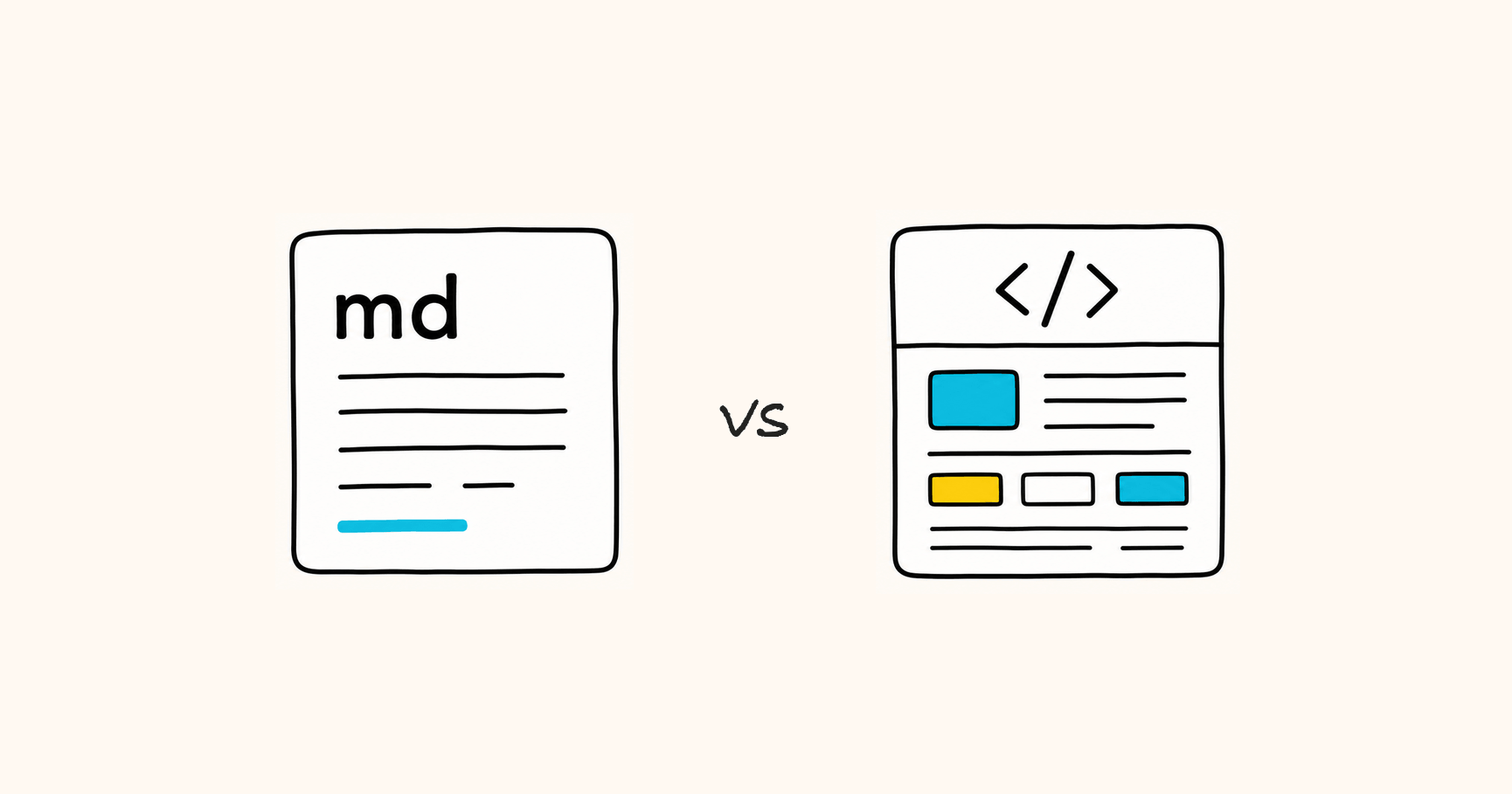
There has been a lively debate lately about whether AI tools should hand you markdown or HTML.
Some well-known voices have argued that HTML is quietly overtaking markdown as the better format for AI-generated documents, and the argument spread fast.
It is a fun debate. It is also, mostly, the wrong one.
Asking whether markdown is better than HTML is like asking whether an apple is better than a blueberry. Both are good. They are not the same thing, and they were never trying to be. Markdown and HTML do two completely different jobs.
Once you see what each one is for, the question stops being which wins. It becomes the more useful one: which fits what I am doing right now.
TL;DR
- Markdown is the working format. Lightweight, plain text, fast to edit by hand, portable, and cheap for AI tools to produce.
- HTML is the finished format. Heavier, but it controls layout precisely, opens in any browser, and is shareable as a link.
- They are not rivals. Markdown is the draft layer, HTML is the publish layer. Most documents start as markdown and convert to HTML to be shared.
The rest of this article unpacks why, and gives you a five-second way to choose.
Quick answer: is markdown better than HTML?
Neither is better. They are built for different stages of a document's life. Markdown is best while you are writing and editing. HTML is best once the document is finished and needs to be displayed or shared. Most workflows use both, in that order.
A 30-second history, because it explains everything
Markdown and HTML were born for opposite reasons, and that origin story is the whole argument in miniature.
- HTML came first, in 1991. Tim Berners-Lee published a document describing the first set of HTML tags, designed to tell a browser how to display a page [1]. It is markup for machines to render. It was never meant to be pleasant to read raw.
- Markdown arrived in 2004, created by John Gruber with Aaron Swartz as a sounding board, as a reaction to exactly that [2]. Writing HTML by hand for a simple blog post was tedious. You wanted to type bold and instead you were writing
<strong>bold</strong>. Gruber's stated goal was readability first: a markdown document should be publishable as-is, as plain text, without looking marked up with tags.
So one was built to be read by browsers. The other was built to be read by people.
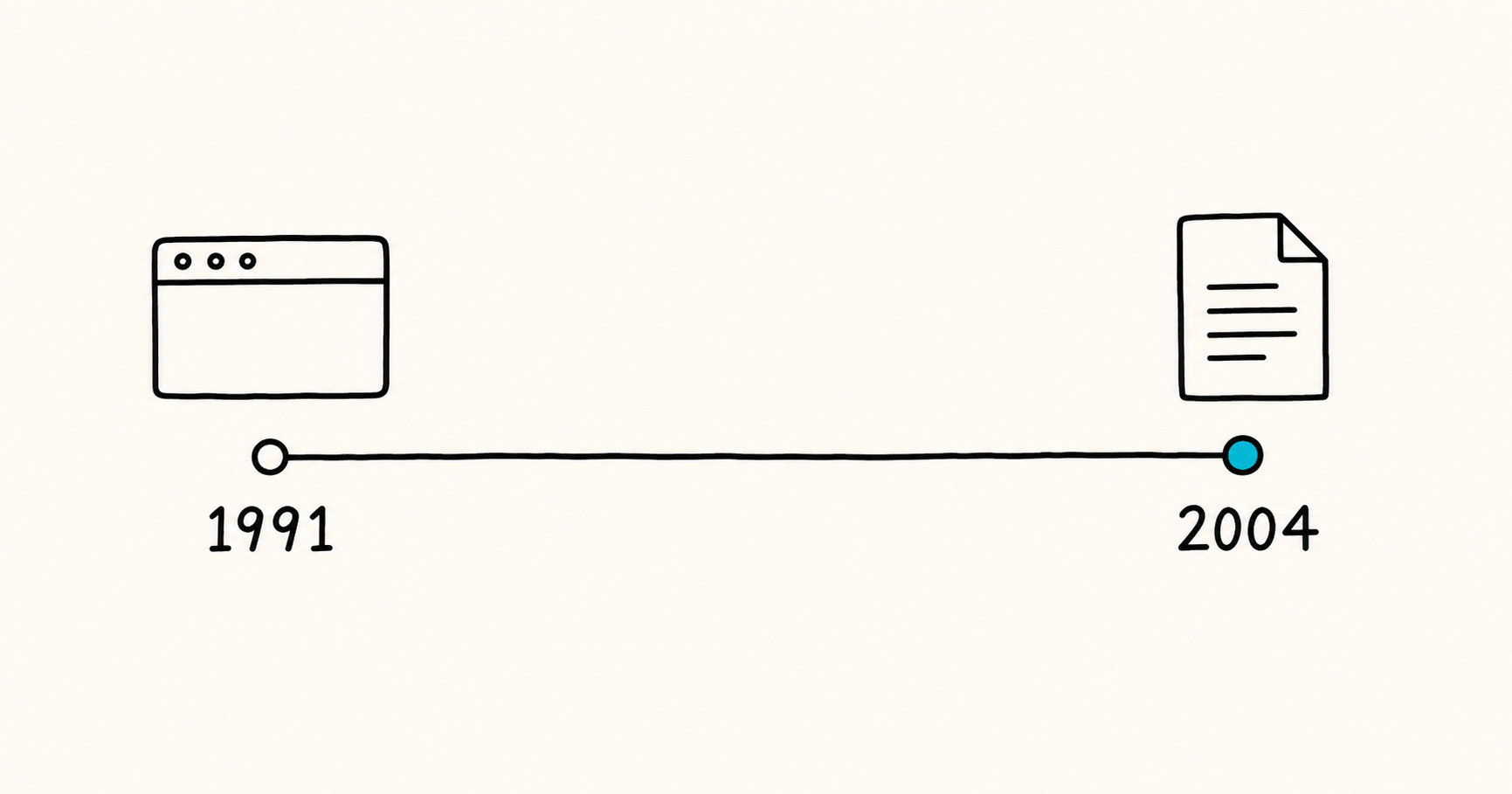
That is not a stylistic quirk. It is the entire reason each exists, and it is why a head-to-head comparison misses the point. They were designed to win different games.
Where the confusion comes from
If they are so different, why does the fight keep breaking out, louder than ever in 2026?
Because both are now things an AI tool hands you. You ask for a summary, a plan, or a report, and what comes back is either markdown or HTML. They arrive in the same moment, in the same chat window, so they look interchangeable. Like two answers to one question.
They are not competing answers. They are different stages of the same document's life:
- The person who says markdown is obviously better, it is clean and editable is right, for drafting.
- The person who says HTML is obviously better, it just opens and looks good is right, for sharing.
Both are correct about their own format and wrong to assume there is a single winner. They are describing two different moments and arguing as if there is only one.
What markdown is good at
Markdown is the working format. You reach for it when a document is still alive: being written, edited, rearranged, and read back.
| Strength | Why it matters |
|---|---|
| Stays readable as plain text | A markdown file makes sense before anything renders it. Raw HTML does not. |
| Fast to write and edit by hand | Two asterisks for bold, a hash for a heading. Almost nothing sits between your thought and the page. |
| Genuinely portable | The same file works in GitHub, Notion, Obsidian, Slack, Reddit, VS Code, ChatGPT, and Claude. |
| Cheap and quick for AI to produce | Far fewer tokens than HTML, so lower cost and faster generation at scale. |
| Clean to version | Change one word and the diff shows one word, not a wall of tags. |
A point that gets overlooked: markdown is simpler to create than a Word document or a PDF, not just simpler than HTML.
- Markdown is just text. You can type it in any plain editor, paste it anywhere, and it stays intact.
- A
.docxor.pdfis a complex file format. You cannot meaningfully write or edit one by hand. It needs dedicated software to create and to open, and the file itself is a packaged bundle of formatting instructions, not readable text. - That makes markdown the most frictionless way to capture formatted content. No application required, no proprietary format, no lock-in.
Formatting is also more consistent in markdown. Because it is plain text with a small set of simple rules, it renders predictably across tools. A Word document can shift depending on the app, the version, or the fonts installed on someone else's machine. Markdown's simplicity is exactly what makes its output reliable.
Markdown is at its best for drafts, notes, documentation, README files, AI chat output, and anything you expect to keep editing.
Where markdown falls down
Honesty matters, because pretending markdown has no limits is how people end up abandoning it.
- It cannot do precise layout: no native way to set fonts, place two columns side by side, or size an image reliably.
- The moment a document needs to look a specific way rather than just tidy, markdown runs out of road and you start dropping in raw HTML to patch the gaps.
- It is a format for structure, not design.
What HTML is good at
HTML is the finished format. You reach for it when a document is done and ready to be seen by someone who will not edit it.
| Strength | Why it matters |
|---|---|
| Total control over presentation | Layout, fonts, colours, spacing, columns, responsive behaviour. If you can picture it, HTML and CSS can build it. |
| Renders natively in any browser | No viewer, no conversion step. Double-click and it appears, formatted. |
| Shareable as a link | Lives at a URL. Send the link, the reader clicks, they see the finished thing on any device. |
| Handles rich content | Embedded video, interactivity, forms, custom styling, all outside markdown's vocabulary. |
The shareability point is HTML's quiet superpower and the strongest argument the pro-HTML camp makes. A markdown file usually needs a renderer or an attachment to look right. An HTML page just opens. For getting people to actually engage with a document, that lower barrier matters.
The trade-off is honest:
- HTML is heavier and more verbose.
- It is harder to edit by hand, often needing dedicated tools or front-end knowledge.
- It costs more tokens for an AI to read or generate, which means it is more expensive and slower to produce when a model is the one writing it. More tokens to generate is literally more work and more time.
You pay for the presentation in complexity. That is not a flaw. It is the deal.
HTML is at its best for final presentation, reports people view rather than edit, marketing pages, and dashboards.
Where HTML falls down
- Editing is painful. Ask an AI for a complex plan as HTML, then try to change a section by hand, and you are wading through nested tags to find one sentence. If you want to edit what was produced, an HTML document is much harder to work with than a markdown one.
- It is not portable. It only fully renders in a browser, so it does not paste cleanly into a chat tool, a notes app, or a code comment.
- It is a finished artifact, not a working draft.
Markdown vs HTML at a glance
| Markdown | HTML | |
|---|---|---|
| Built for | Writing and editing | Display and sharing |
| Readable as plain text | Yes | No |
| Edit by hand | Easy | Hard |
| Precise layout and styling | No | Yes |
| Opens in a browser directly | Needs rendering | Yes |
| Share as a link | Not directly | Yes |
| Token cost for AI to produce | Low | High (more tokens) |
| Portability across apps | Excellent | Limited |
| Best stage | The draft | The finished piece |
See the difference for yourself
The clearest way to feel the gap is to write the same thing in both formats.
Markdown:
## Quarterly update

Revenue grew **12%** this quarter. See the [full report](report.html).
The exact same content in HTML:
<h2>Quarterly update</h2>
<p>Revenue grew <strong>12%</strong> this quarter. See the <a href="report.html">full report</a>.</p>
Same information, same meaning. On this short snippet the HTML version is already noticeably longer, and on a full document with lists, tables, and nesting the gap typically widens to around three times the size, since every element needs an opening and closing tag.
- The markdown is nicer to type and nicer to edit a month from now.
- The HTML is nicer to hand over, because a browser displays it with no help.
- For an AI, the markdown is cheaper and quicker to generate. The HTML costs more tokens for the same content.
Neither is wrong. They are optimised for different moments.
They are not rivals, they hand off to each other
Here is the part the "which is better" framing misses, and it is the most useful idea in this piece.
In real work you do not usually choose markdown instead of HTML. You use both, at different stages, and they pass the document between them.
- You draft and edit in markdown, because it is fast, forgiving, and you will change things twenty times.
- When the document is ready, you convert it to HTML so it renders cleanly, looks right, and can be shared as a link.
Markdown is the draft layer. HTML is the publish layer. They are a relay, handing the baton from writing to showing.
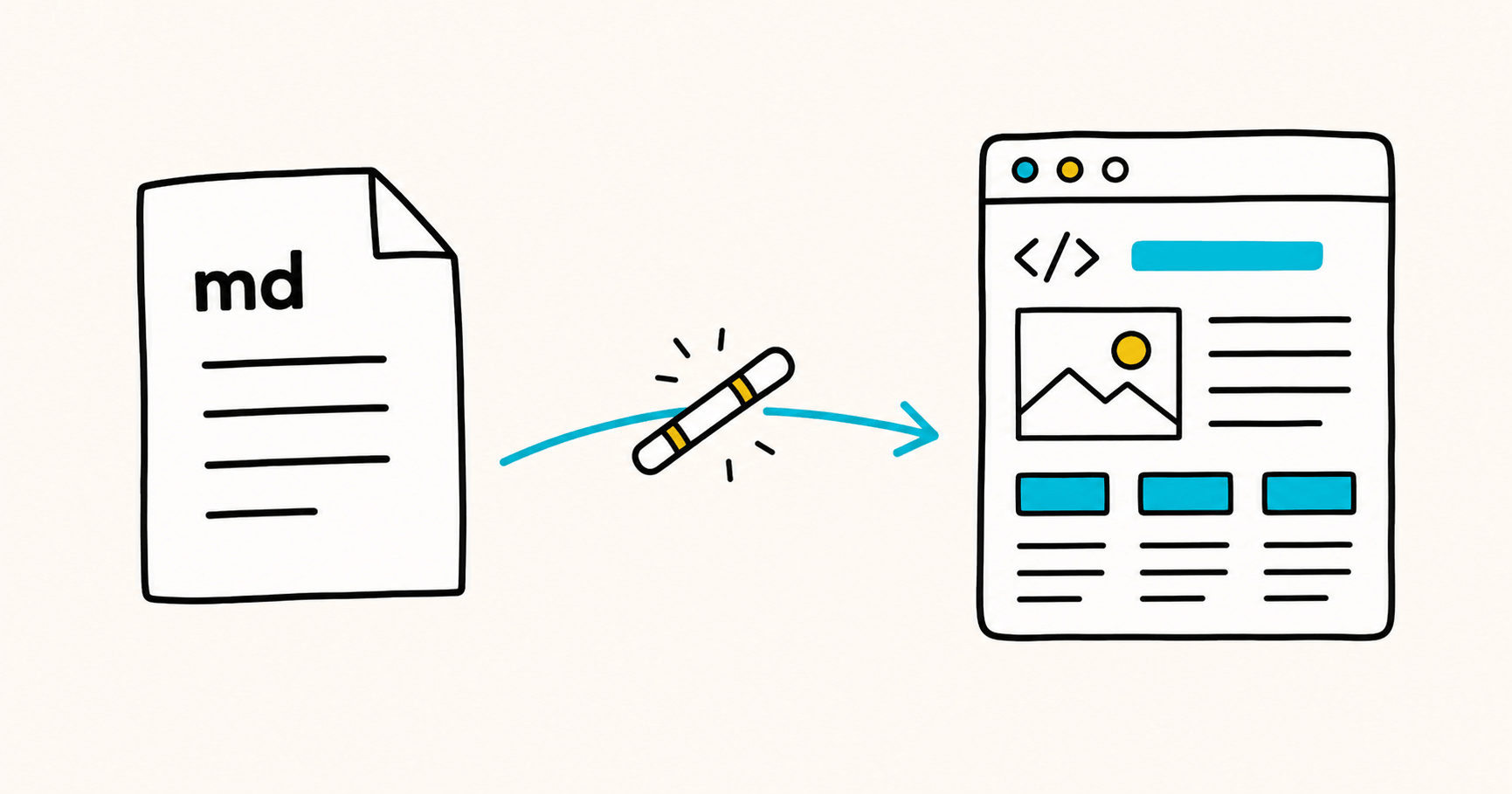
This is not a theory. It is how much of the web already works. A great deal of what you read in a browser — blog posts, documentation, READMEs rendered on GitHub — started as markdown in someone's editor and was turned into HTML automatically on the way out. The author never hand-wrote the HTML. That alone is good evidence the two were never really rivals.
So when an AI hands you markdown, it is often handing you the editable draft. When it hands you HTML, it is handing you the finished view.
A simple way to choose
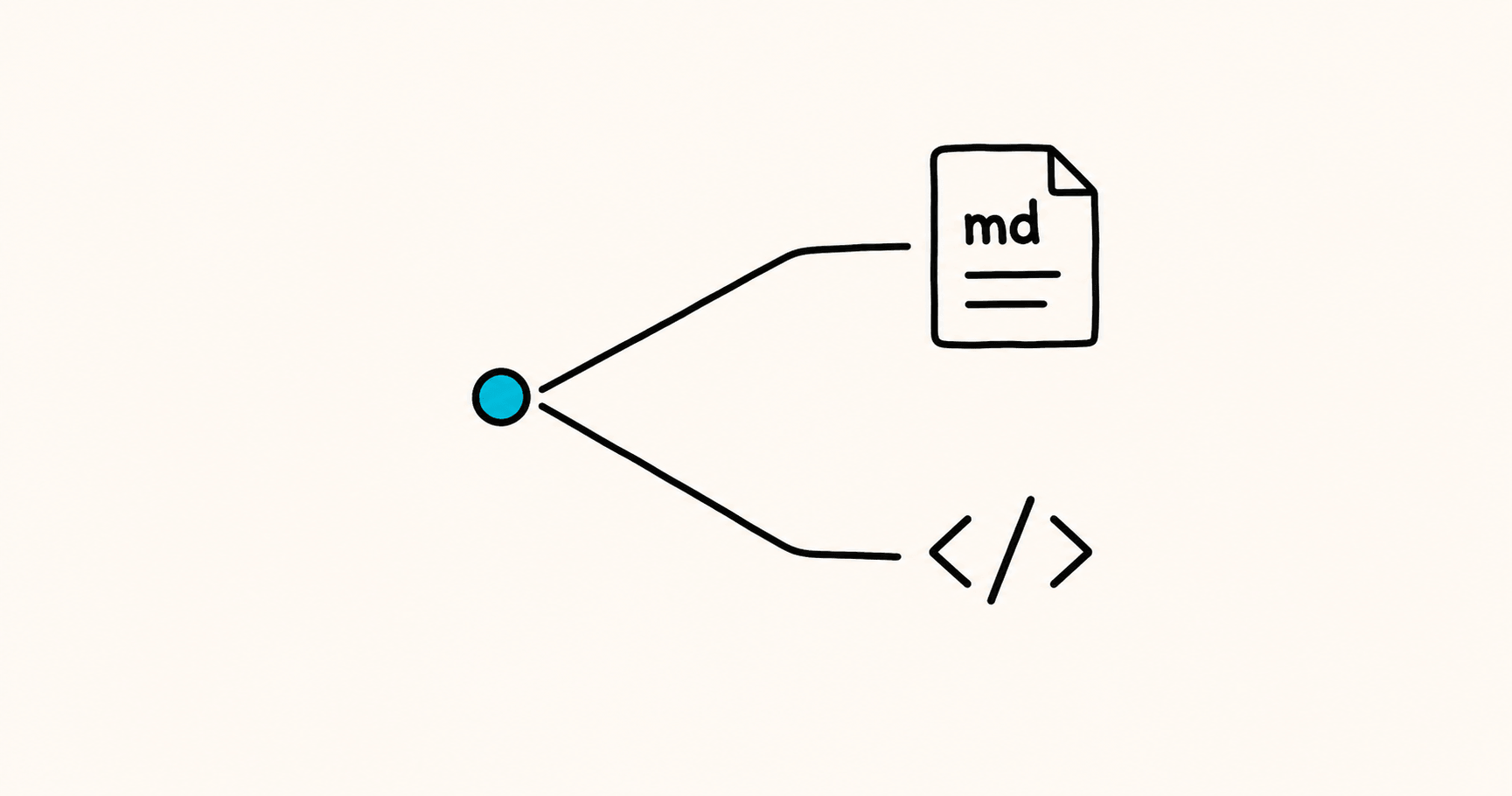
When you are not sure which format you want, four questions settle it almost every time.
| Question | If yes |
|---|---|
| Will you keep editing it? | Markdown |
| Does it need to look a specific way for other people? | HTML |
| Is a machine going to read it back later? | Markdown |
| Is this the final thing a person will see? | HTML |
A rough rule of thumb: if you are still making the document, markdown. If you are done with it, HTML.
So who actually won the debate?
Nobody, and that is the honest answer rather than a cop-out.
- The HTML camp is right that finished, shareable, good-looking output is underrated, and that a plan nobody opens may as well never have been written.
- The markdown camp is right that an editable, portable, lightweight draft is exactly what you want while the work is in motion.
Both describe real strengths. They describe different jobs. The framing that one format is replacing the other hides the only decision that matters: what is this document for?
Frequently asked questions
Is markdown better than HTML?
Neither is better. Markdown is better for writing and editing. HTML is better for display and sharing. They are built for different stages of a document.
Why do AI tools output markdown?
Markdown costs far fewer tokens than HTML, so it is cheaper and quicker for a model to generate. It is also clean, editable, and portable, which suits the back and forth of working with an AI.
Is markdown easier than Word or PDF?
To create and edit by hand, yes. Markdown is plain text you can type anywhere. Word and PDF are complex file formats that need software to create and open. Markdown also formats more consistently across different tools.
Should I use markdown or HTML for a document I want to send to someone?
If they only need to read it, HTML is friendlier because it opens and looks finished. If they need to edit it with you, markdown is easier to work in.
Can I convert markdown to HTML?
Yes, and it is extremely common. Most publishing pipelines write in markdown and convert to HTML automatically for the web.
Is HTML replacing markdown for AI output?
No. The two are not competing. Markdown is the editable working format an AI hands you for drafting, while HTML is the finished format for display and sharing. Most workflows use both: draft in markdown, then convert to HTML to publish.
What is markdown best used for?
Drafts, notes, documentation, README files, AI chat output, and anything you expect to keep editing. It stays readable as plain text, is fast to edit by hand, and is portable across almost every tool.
Why does HTML cost more tokens than markdown?
Every HTML element needs an opening and closing tag, so the same content runs roughly three times larger than the markdown equivalent. More tokens means it is more expensive and slower for an AI model to generate.
The short version
Stop asking which format wins. Markdown and HTML are not on the same axis, any more than apples and blueberries are.
- One is built for writing and editing.
- The other is built for display and sharing.
- They shine in opposite moments, and in most real workflows they hand off to each other rather than compete.
The only question that matters is what your document is for. Most of the time, the honest answer is that you will touch both.
Related reading
- How to open a .md file on desktop (Mac & Windows) — three simple ways to open and read a markdown file cleanly.
- Markdown cheat sheet — every markdown syntax with a working example for each.
- Markdown table generator — build a table in a visual grid and copy clean GitHub Flavored Markdown.
References
- Web Design Museum, "Tim Berners-Lee published a document called HTML Tags" (1991). webdesignmuseum.org ↩
- John Gruber, "Markdown" project page, Daring Fireball (2004). daringfireball.net ↩