
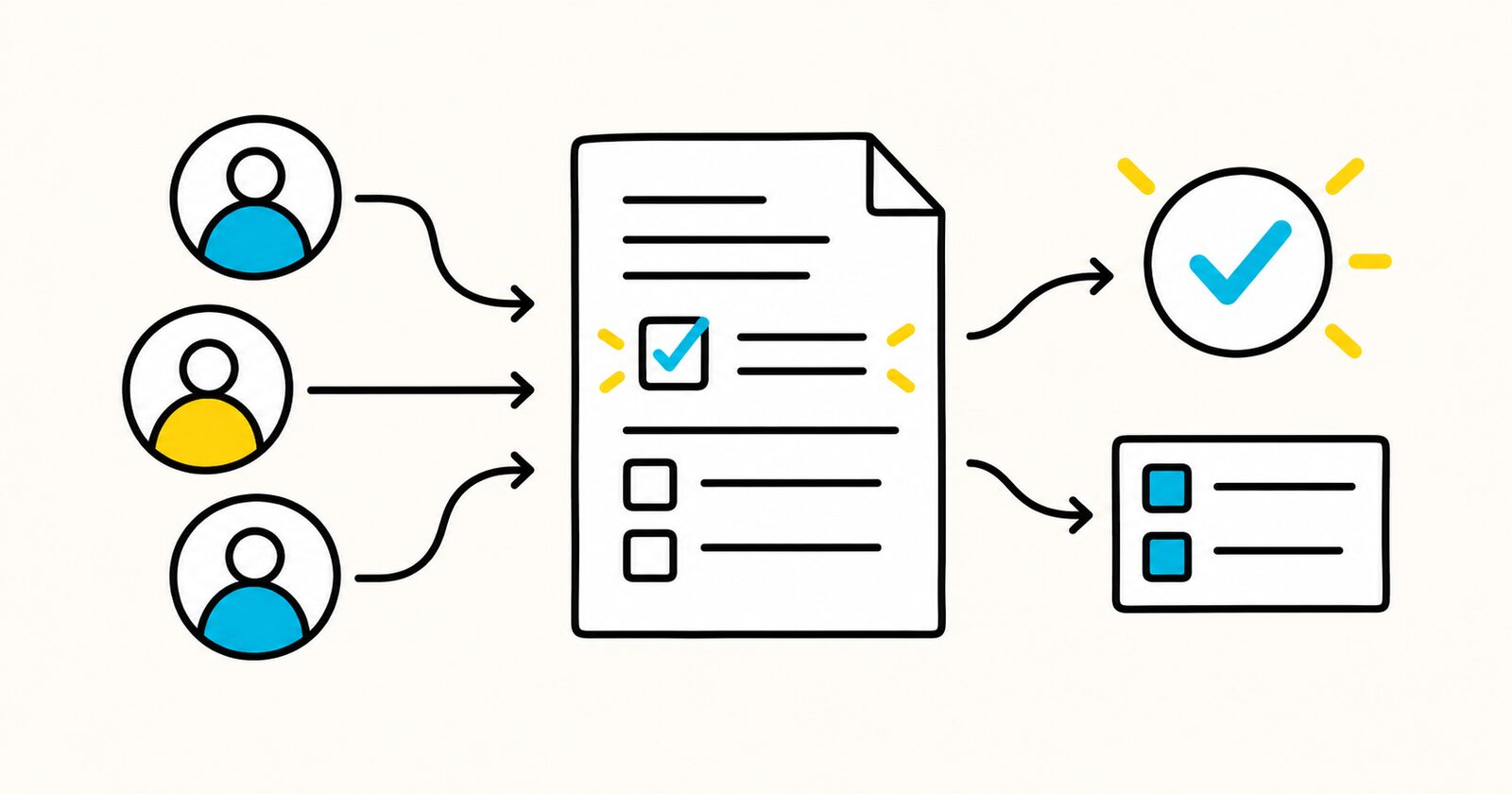
Meeting notes key facts
- Record the purpose before the meeting starts.
- Separate discussion from decisions so readers can scan the result.
- Give every action one owner and a due date.
- Label open questions instead of presenting them as decisions.
- Send or publish the notes soon enough for attendees to correct errors.
Copyable Markdown meeting notes template
# Meeting notes: [Meeting name]

**Date:** YYYY-MM-DD
**Time:** HH:MM–HH:MM [time zone]
**Location:** [Room or meeting link]
**Facilitator:** [Name]
**Note taker:** [Name]

## Attendees

- [Name, role]

## Purpose

[One sentence describing the outcome this meeting should produce.]

## Agenda

1. [Topic and owner]

## Discussion notes

### [Agenda topic]

- **Context:** [Relevant facts]
- **Discussion:** [Important points]
- **Outcome:** [Decision, open question, or next step]

## Decisions

| Decision | Owner | Date decided | Notes |
|---|---|---|---|
| [Decision] | [Name] | YYYY-MM-DD | [Reason or constraint] |

## Action items

| Action | Owner | Due date | Status |
|---|---|---|---|
| [Specific action] | [Name] | YYYY-MM-DD | Not started |

## Risks and open questions

- [Risk or question] · **Owner:** [Name] · **Review by:** YYYY-MM-DD

## Next meeting

**Date:** YYYY-MM-DD
**Proposed agenda:** [Topics]
Completed example
## Decisions

| Decision | Owner | Date decided | Notes |
|---|---|---|---|
| Release the new checkout to 10% of traffic first | Mei | 2026-10-02 | Expand only if error rate stays below 1% |

## Action items

| Action | Owner | Due date | Status |
|---|---|---|---|
| Add checkout error-rate dashboard | Daniel | 2026-10-01 | In progress |
Common mistakes
- Writing a transcript that hides the outcome.
- Assigning an action to “the team” instead of one owner.
- Omitting dates or time zones.
- Mixing proposals with approved decisions.
How to take better meeting notes
Prepare the title, purpose, agenda, and attendee list before the meeting. During discussion, capture facts, alternatives, objections, and outcomes. Do not try to preserve every sentence.
Before closing, read back each decision and action. Confirm the owner, due date, and meaning of “done.” After the meeting, mark any disputed point and ask the relevant participant to correct it. Keep the original decision record when a later meeting changes direction.
For recurring meetings, create one file per date and maintain a separate decision log if people frequently need to trace earlier choices.
Useful file name
Use an ISO date so notes sort chronologically: 2026-09-29-checkout-release-meeting-notes.md.
When to use this template
Use it for project reviews, planning meetings, incident follow-ups and stakeholder discussions that produce decisions or assignments. For a private one-to-one discussion, performance review or legally sensitive session, follow the organization's access and retention policy rather than placing unrestricted notes in a shared repository.
Meeting notes FAQ
Should meeting notes record every comment?
Usually not. Capture the facts, alternatives, objections, decisions and assigned actions that readers need later. A transcript is harder to scan and can obscure the outcome.
Who should approve the notes?
The facilitator or decision owner should verify material decisions. Attendees should have a short opportunity to correct factual errors, particularly names, dates and assigned work.
Where should meeting notes be stored?
Use a shared, searchable location with appropriate access. Keep a consistent file name and link the notes from the relevant project plan, decision record or issue.