
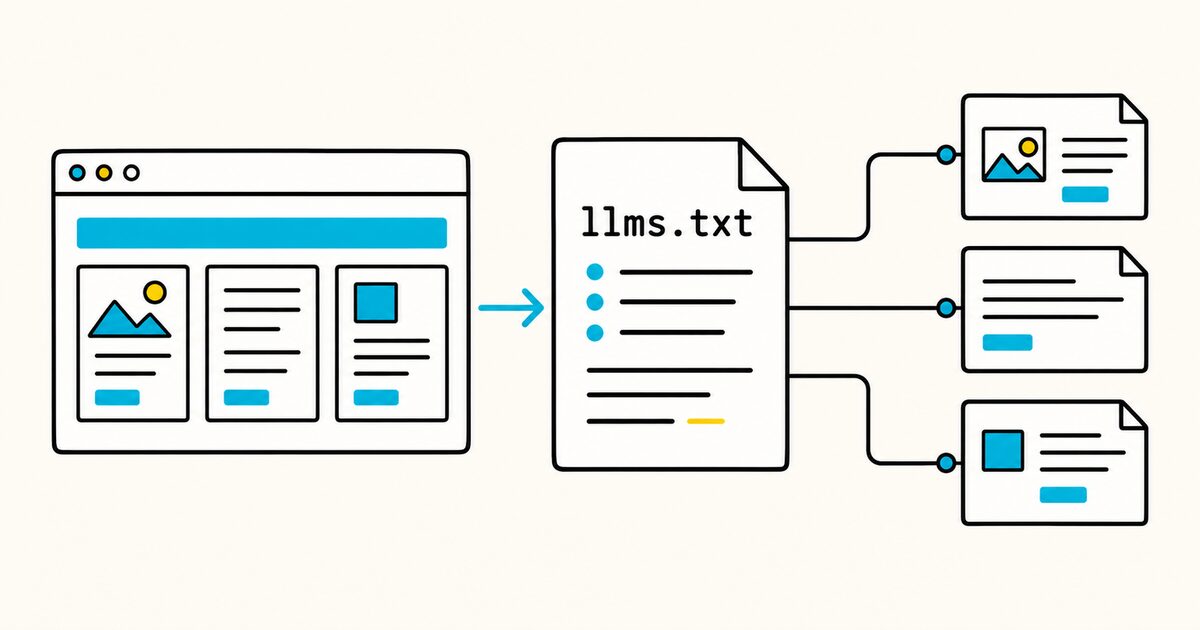
It is not an access-control file, a sitemap replacement, or a proven search-ranking method. Google states that Google Search does not use llms.txt and that the file neither helps nor harms Google rankings.
Create one only when a compatible tool or your audience can use it, and when you can keep it accurate. It should complement useful public pages, not compensate for weak content or crawl problems.
llms.txt at a glance
| Property | Value |
|---|---|
| Status | Open proposal, not an IETF or W3C web standard |
| Format | Markdown served from a .txt URL |
| Common location | https://example.com/llms.txt |
| Required content | One H1 containing the project or site name |
| Recommended content | Blockquote summary, context, and H2 link sections |
| Access control | None; use robots.txt and authentication instead |
| Google ranking effect | None according to Google Search documentation |
| Best use | A curated entry point for agents or tools that choose to read it |
llms.txt Key facts
- The only required part of the proposal is one H1 containing the project or site name.
- A short blockquote summary should explain what the project is and what an agent needs to know.
- H2 sections contain Markdown link lists, with an optional description after each link.
- A section named
Optionalconventionally holds secondary links an agent can skip for shorter context. - Version 2 of the proposal allows
llms.txtat the site root or a subpath such as/docs/llms.txt. - A path-level file covers pages beneath that path; the proposal says the most specific applicable file should be used.
- The proposal also recommends Markdown versions of useful pages and standard link relations, but those additions are not required to create a basic file.
- Google Search explicitly ignores
llms.txtfor visibility and rankings.
The llms.txt format
The proposed order is:
- An optional byte-order mark.
- One H1 with the site or project name. This is the only required section.
- A blockquote with a short summary.
- Optional Markdown context, but no additional headings before the first H2.
- Zero or more H2 sections containing lists of links.
A link-list item uses this form:
- [Page title](https://example.com/page): Short description of the page
A minimal valid file can be only:
# Acme Docs
That is technically valid but not very helpful. A useful file adds concise context and selected links.
Copyable llms.txt template
# [Site or project name]

> [One or two sentences explaining what the site provides, who it is for,
> and the most important fact an agent needs to interpret the links.]

[Optional short notes about product scope, versions, terminology, canonical
sources, or how to use the linked pages. Do not add another heading here.]

## [Primary section]

- [Page title](https://example.com/page): [What the page contains and when it is useful]
- [Page title](https://example.com/page): [What the page contains and when it is useful]

## [Second section]

- [Page title](https://example.com/page): [Concise description]

## Optional

- [Secondary page](https://example.com/page): [Why it may be useful]
Replace the placeholders with canonical, public URLs. Remove sections that do not help an agent understand or use the site.
Complete llms.txt example for a software product
# Acme Tasks

> Acme Tasks is a project-management application for small product teams.
> This file links to the canonical product, API, security, and support documentation.

Acme Tasks has a web application and a public REST API. The current API version
is v2. Product limits and prices can change; use the linked pricing and limits
pages rather than repeating those values from this file.

## Product

- [Product overview](https://www.example.com/product): Features, supported workflows, and intended users
- [Pricing](https://www.example.com/pricing): Current plans, billing periods, and plan limits
- [Security](https://www.example.com/security): Security practices, data handling, and compliance information
- [Service status](https://status.example.com/): Current incidents and historical uptime

## Documentation

- [Getting started](https://docs.example.com/getting-started): Create a workspace, invite a team, and start the first project
- [API overview](https://docs.example.com/api/): Authentication, base URL, versioning, and response conventions
- [API reference](https://docs.example.com/api/reference): Endpoints, request fields, response schemas, and errors
- [Webhooks](https://docs.example.com/webhooks): Event types, signatures, retries, and example payloads
- [Limits](https://docs.example.com/limits): Current API and product limits

## Support

- [Help centre](https://support.example.com/): Troubleshooting and account guidance
- [Contact support](https://www.example.com/support): Supported contact routes and required diagnostic details

## Optional

- [Release notes](https://www.example.com/releases): Recent product changes and deprecations
- [Company](https://www.example.com/company): Company and ownership information
This example links changing facts instead of copying prices and limits into a file that may become stale.
Complete example for a content website
# Field Notes

> Field Notes publishes evidence-based guides to maintaining native gardens in
> humid tropical climates. Articles are written for home gardeners in Singapore.

Plant recommendations depend on light, soil, drainage, building rules, and
local biodiversity guidance. Use the linked article's date and sources when
answering a time-sensitive question.

## Start here

- [Native gardening guide](https://www.example.com/guides/native-gardening): Planning, plant selection, soil, water, and maintenance
- [Plant directory](https://www.example.com/plants): Profiles filtered by light, height, and habitat value
- [Balcony gardening](https://www.example.com/guides/balcony-gardening): Weight, drainage, wind, and container considerations

## Practical references

- [Low-light plants](https://www.example.com/guides/low-light-plants): Plants suited to shaded balconies and courtyards
- [Watering guide](https://www.example.com/guides/watering): How weather, soil, and containers affect watering frequency
- [Pest identification](https://www.example.com/guides/garden-pests): Common symptoms, likely causes, and low-risk responses

## About and editorial policy

- [Editorial process](https://www.example.com/editorial-policy): Research, review, corrections, and update dates
- [Authors](https://www.example.com/authors): Contributor experience and article lists
- [Corrections](https://www.example.com/corrections): Material corrections to published guidance

## Optional

- [All articles](https://www.example.com/articles): Complete chronological archive
The file describes scope and source quality without making unsupported claims that every article was independently tested.
How to choose the links
Do not turn llms.txt into a copy of the XML sitemap. Select pages that help an agent understand the site or complete a task.
Prioritize:
- a clear product or project overview;
- current documentation and API references;
- pricing, limits, security, status, and support pages when relevant;
- canonical guides that answer the main user tasks;
- editorial, author, or methodology pages that help assess reliability;
- policies or terms when an agent may act on behalf of a user.
Avoid:
- thin tag, archive, pagination, and duplicate filter pages;
- outdated campaigns;
- internal or authenticated URLs;
- tracking parameters;
- links that redirect several times;
- claims copied from pages you do not maintain;
- every article merely to make the file look comprehensive.
If the site is large, use focused path-level files such as /docs/llms.txt and /help/llms.txt where that structure helps compatible clients.
Publish llms.txt
Static sites and common frameworks
Place the file in the directory copied to the site root. In many frameworks this is named public/ or static/:
project/
├── public/
│   └── llms.txt
└── src/
After deployment, the expected URL is:
https://example.com/llms.txt
WordPress and managed platforms
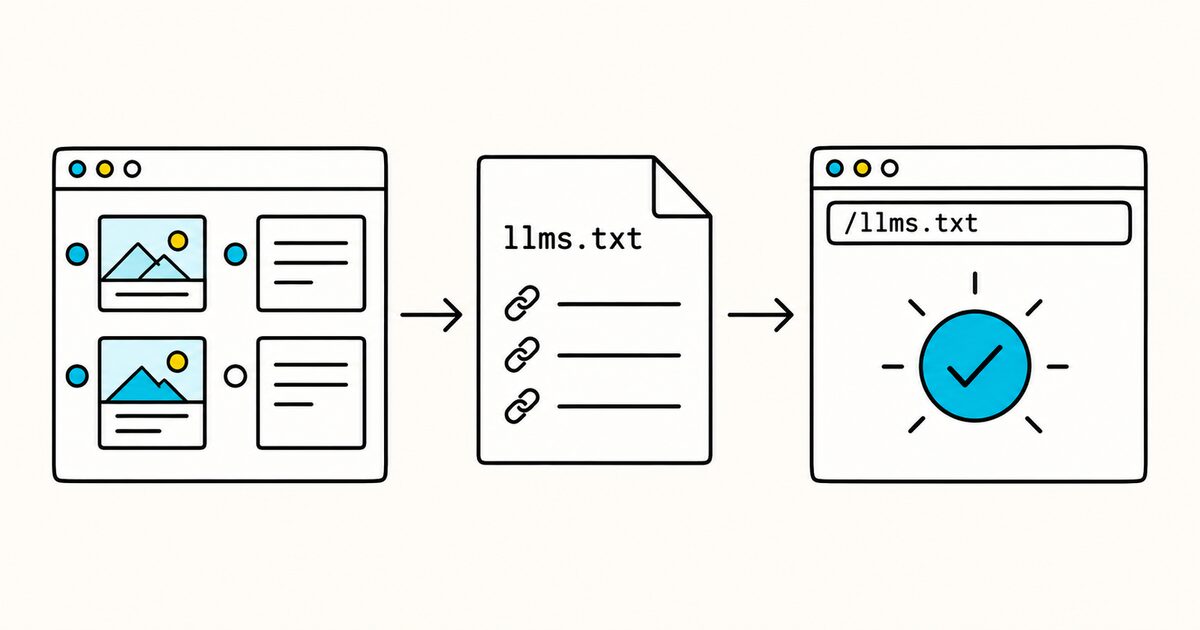
Use a method that serves a real public file or route at /llms.txt. This may be a plugin, a theme or application route, a server rule, or a file placed by the host.
Check that the method does not:
- redirect to an HTML page;
- wrap the text in a theme;
- require a login or cookie consent interaction;
- generate stale links from unpublished content;
- overwrite a manually maintained file without warning.
Content type
The proposal defines Markdown content at a .txt path. Serve a readable plain-text response, commonly text/plain; charset=utf-8. Some implementations use text/markdown.
Compatibility matters more than arguing over the label. Confirm that the file returns its raw contents without an HTML shell.
Validate the live file
Check the deployed URL, not only the source file.
curl -i https://example.com/llms.txt
Confirm:
- HTTP status
200; - no unexpected redirect;
- a plain-text or Markdown-compatible content type;
- UTF-8 text displays correctly;
- exactly one project-name H1;
- link sections use H2 headings;
- each listed URL is public and canonical;
- no secrets, private hostnames, unpublished pages, or staging URLs appear;
- descriptions agree with the linked pages.
Then check the links individually. A syntactically valid file full of broken or redirected URLs is not useful.
llms.txt versus robots.txt and sitemap.xml
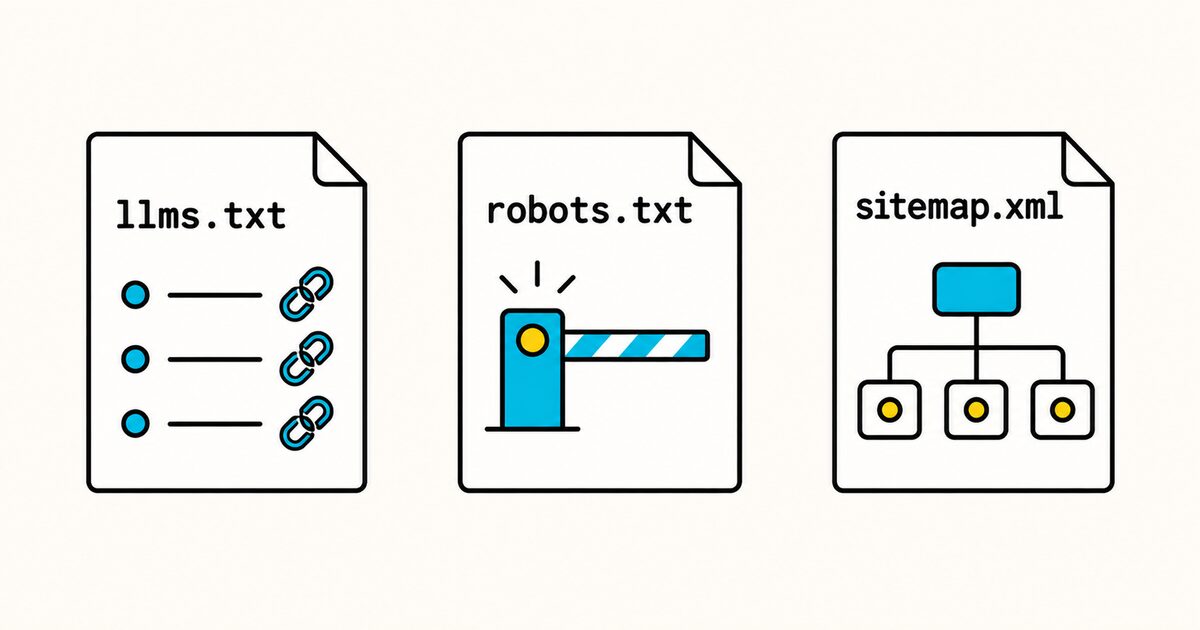
| File | Main purpose | Does it control access? | Typical audience |
|---|---|---|---|
llms.txt |
Curated context and links for agents that choose to read it | No | AI agents and tools |
robots.txt |
Express crawler access preferences | It communicates rules but is not authentication | Compliant crawlers |
sitemap.xml |
List discoverable site URLs and metadata | No | Search engines and crawlers |
Do not put a private URL in llms.txt and assume a crawler will stay away. Protect private resources with authentication and authorization.
Do not remove pages from the XML sitemap because they are not in llms.txt. The two files serve different purposes.
Does llms.txt improve SEO or GEO?
There is no evidence that adding llms.txt by itself improves Google rankings. Google’s current guidance is explicit: Google Search does not use the file, and creating one neither helps nor harms visibility in Google Search.
The proposal may still be useful for:
- an agent or integration that explicitly discovers and reads the file;
- documentation tooling that generates or consumes it;
- giving people and compatible tools one concise index of canonical resources;
- experimenting with an emerging convention at low implementation cost.
Do not describe the file as an “AI ranking file,” a guaranteed citation method, or the LLM equivalent of SEO. Those claims go beyond the available evidence.
For search and generative-search visibility, prioritize:
- crawlable, indexable pages;
- unique and genuinely useful content;
- accurate titles and descriptions;
- descriptive internal links;
- clear authorship and sourcing where trust matters;
- fast, accessible pages;
- Search Console data and actual user queries;
- current structured data when it accurately represents visible content.
What about llms-full.txt?
Some sites publish llms-full.txt, a larger file containing the full text of selected pages. It is a related convention, not the required llms.txt format.
Before publishing one, consider:
- file size and context limits;
- duplicated and stale content;
- licensing and redistribution rights;
- accidental inclusion of private or low-quality material;
- whether the consuming tool actually supports it;
- the maintenance cost when source pages change.
Start with a concise llms.txt. Add a full-text file only for a documented consumer or clear use case.
Markdown versions of web pages
Version 2 of the proposal recommends providing a clean Markdown version of useful pages. Suggested URL patterns append or replace an extension, such as page.html.md or page.md.
It also recommends standard link relations:
<link rel="alternate" type="text/markdown" href="/docs/page.md">
<link rel="describedby" href="/docs/llms.txt">
An equivalent HTTP Link header can serve non-HTML resources. These features are optional additions and require more publishing infrastructure than a basic llms.txt file.
Do not create Markdown mirrors you cannot keep synchronized with the canonical pages.
Common llms.txt mistakes
Claiming it improves Google rankings
Google says it ignores llms.txt for Search visibility and ranking. Present the file as an optional agent-facing convention.
Copying the sitemap
A sitemap aims for discovery coverage. llms.txt is curated. Select important sources and explain what each one contains.
Treating it as robots.txt
llms.txt does not grant, deny, or enforce crawler access. Use authentication for privacy and robots.txt for crawler directives.
Listing URLs without descriptions
Descriptions help an agent choose the right source. Say what the page contains, not that it is “useful” or “important.”
Publishing unstable facts in the summary
Prices, limits, versions, and availability change. Link to the current source unless the file is generated from the same authoritative data.
Generating it and never reviewing it
Automatic generation can include draft, duplicate, redirected, or low-value pages. Review the output and define an owner.
Including private information
The file is public. Never include secrets, unpublished URLs, customer names, internal hostnames, or instructions intended only for employees.
Maintenance checklist
- Assign an owner for the file.
- Review it after major information-architecture or product changes.
- Check every link for
200status and canonical destination. - Remove retired products and obsolete documentation.
- Keep changing facts on their authoritative pages.
- Confirm generated files include only public, published URLs.
- Compare the file with the current proposal before making structural changes.
- Do not claim ranking or citation improvements without measured evidence.
FAQ
What is llms.txt?
llms.txt is a proposed Markdown format for giving AI agents a concise description of a website and links to its important pages.
Where should llms.txt go?
The common location is /llms.txt at the site root. Version 2 of the proposal also permits path-level files such as /docs/llms.txt.
What is required in llms.txt?
Only one H1 containing the project or site name is required. A useful file normally adds a blockquote summary and H2 sections containing descriptive Markdown links.
Does llms.txt improve Google rankings?
No. Google states that Google Search does not use llms.txt and that the file neither helps nor harms Search visibility or rankings.
Is llms.txt the same as robots.txt?
No. robots.txt communicates crawler access preferences. llms.txt provides context and links for agents that choose to read it. Neither file replaces authentication.
Does llms.txt replace sitemap.xml?
No. A sitemap lists site URLs for discovery. llms.txt is a curated overview with descriptions and selected resources.
Should every website create llms.txt?
No. Create it when a supported tool, documentation platform, or audience can use it and when the site can maintain it. It is optional for Google Search.
What is llms-full.txt?
It is a related convention containing a larger body of page content. It is not required by the basic llms.txt format and can create size, freshness, and rights-management problems.
Sources and verification
- The llms.txt proposal, version 2
- Google Search: Optimizing for generative AI features
- Google Search: Creating helpful, reliable, people-first content
The format and search guidance were checked on 29 September 2026. The proposal and product support can change. Recheck the official sources before making adoption claims.
Related pages
- Markdown files for AI agents
- What is a .md file?
- Markdown on GitHub
- How to write a README
- Markdown links